
Night feeds put new parents awake and alone during the exact hours their whole support network is asleep. Here's how instant and scheduled Mimicall calls fill that specific gap.
It's 2:47 a.m. The bottle is warm, the baby is finally latching, and the house is completely silent except for tiny feeding sounds and your own heartbeat. Your partner is asleep — you traded off two hours ago and it's only fair to let them rest. Everyone you'd normally text is asleep too. This is the exact moment a growing number of new parents have started reaching for Mimicall: not for parenting advice, not for a chatbot, but for an actual phone call with a voice on the other end while they sit in the dark and wait for a tiny human to finish eating.
The newborn stretch — roughly the first three to six months — turns a parent's schedule into something almost nobody else in their life shares. Feedings happen every two to three hours around the clock, which means a huge amount of a new parent's waking life now happens in a window when literally everyone they know is unconscious. Mimicall didn't set out to be a tool for 3 a.m. feeds, but it's turned into one, because a scheduled or instant AI phone call app doesn't care what time your baby decided to be hungry.
Key Takeaways
- Newborn feeding schedules routinely put parents awake and alone during hours when their entire support network is asleep.
- Mimicall can be called instantly, in the moment, or scheduled around a baby's typical feeding window, so a parent isn't stuck choosing between silence and doom-scrolling.
- Conversational AI voice calls give tired hands something to listen to without needing a screen, which matters when one arm is holding a baby.
- Persona customization lets an exhausted parent choose something low-key and undemanding rather than a high-energy conversation they don't have the bandwidth for.
- This is a distinct use case from general caregiving support — it's specifically about the isolation of the overnight infant-feeding window, not caregiving fatigue in general.
Why does the newborn stage feel so isolating, specifically at night?
Daytime new-parent loneliness gets talked about constantly — mommy groups, postpartum depression awareness, "it takes a village" messaging. What gets talked about far less is the specific, recurring isolation of the 2 a.m., 4 a.m., and 6 a.m. feeds, which happen whether or not anyone else is awake to keep you company. During the day, a parent might get a knock at the door, a call from a friend, a walk to the mailbox. At 3 a.m., none of that exists. It's just the parent, the baby, and the quiet.
Pediatric sleep guidance is clear that this cluster of overnight wakings is completely normal newborn behavior, not something to fix — but "normal" doesn't make it less lonely. A parent can be surrounded by love during the day and still feel completely alone during the exact hours their body and brain are most depleted. That gap between "supported in general" and "supported right now, at 3 a.m." is precisely what a Mimicall call is built to close.
Can an AI call my phone in the middle of the night without waking anyone else up?
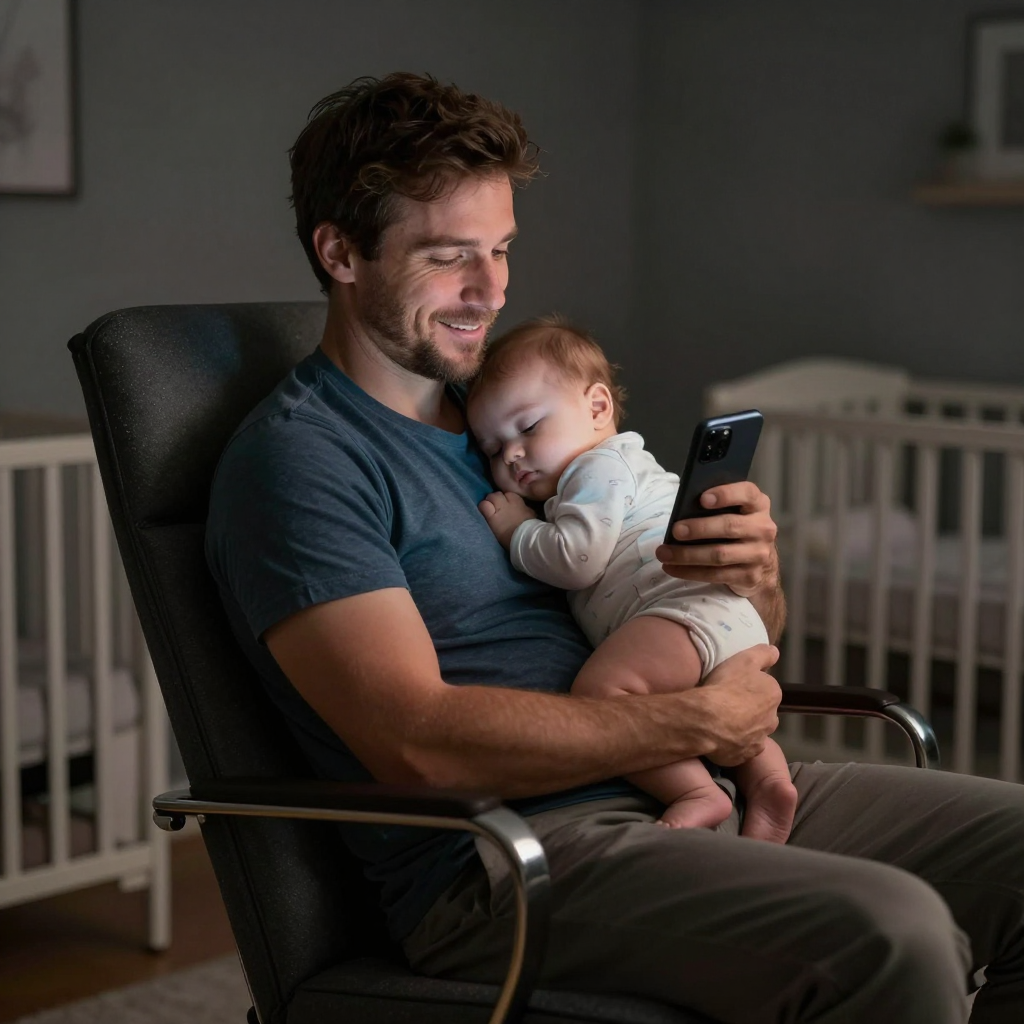
Yes — that's the practical mechanic that makes this work for feeding-window use. A Mimicall call goes straight to the parent's own phone, at whatever volume and however they choose to answer it, without disturbing a sleeping partner or, more importantly, the baby who's finally settling in to eat. Some parents schedule a call for their most reliably wakeful feed of the night; others just place an instant call the moment they're sitting down in the nursery chair, since no two nights of newborn sleep look the same.
Underneath the call, conversational AI is doing real-time listening and responding, not just playing back a recording, and the whole exchange is voiced through text-to-speech technology tuned for natural pacing rather than a flat, robotic read. For a parent operating on fragmented sleep, that distinction matters more than it sounds like it should — a call that sounds genuinely present is a very different experience than a call that sounds like an automated system reading a script.
What does a parent actually want to talk about at 3 a.m.?
Almost never parenting advice. Actually holding a conversation about a work problem, a decision they're stuck on, a show they watched before the baby, or just ordinary, undemanding chat is often exactly what tired brains want — a reminder that they're still a whole person outside of "parent," even during the hardest possible hour to feel like one. This is where natural language processing lets the call go wherever the parent takes it, instead of steering toward a fixed set of parenting topics, because most nights the last thing an exhausted new parent wants is another conversation that revolves entirely around the baby.
Underneath that flexibility are large language models capable of tracking a real, meandering conversation — following a tangent about a coworker, circling back to something mentioned ten minutes earlier, adjusting tone if the parent goes quiet mid-feed because the baby stirred. A scripted IVR system couldn't do any of that. A genuinely conversational one can.
Why does a phone call work better than scrolling a phone one-handed?
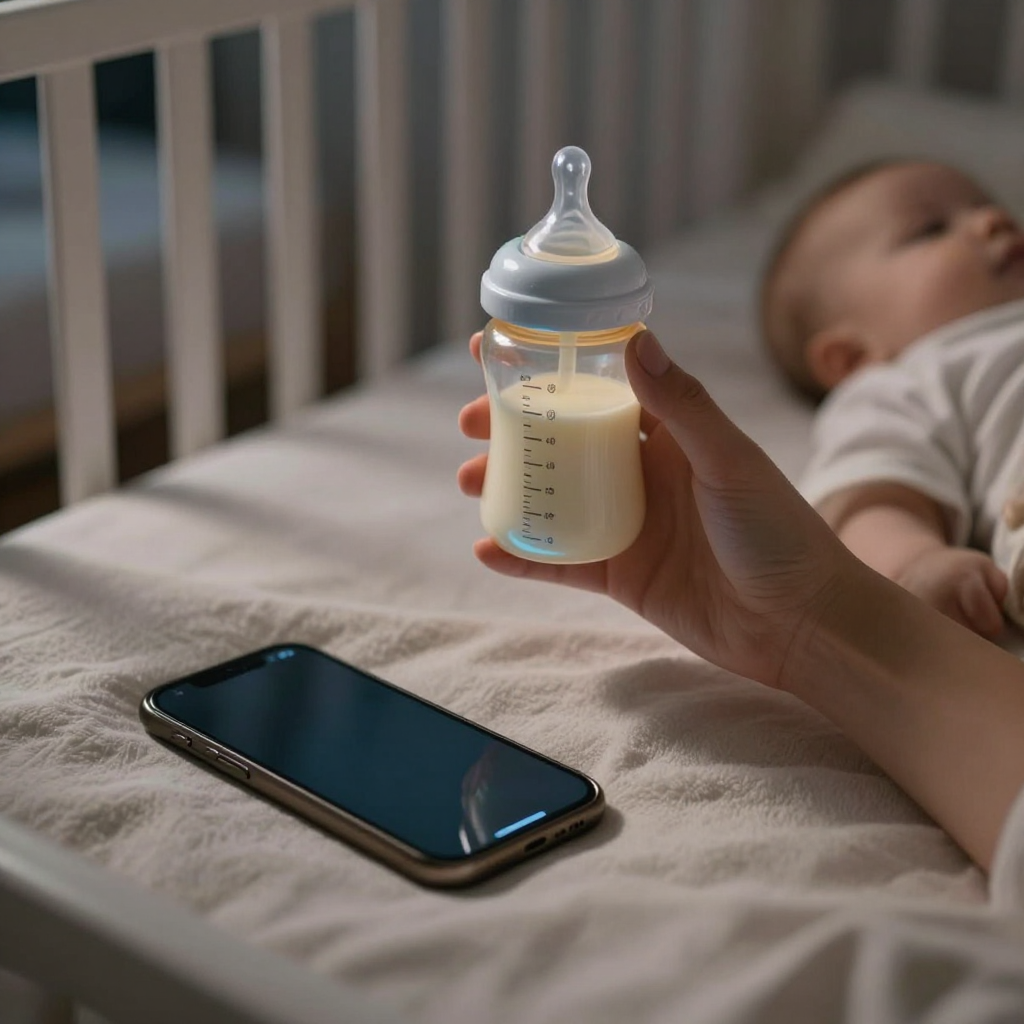
Feeding a newborn is a one-arm job. The other hand is either supporting a bottle, a head, or is simply pinned under a sleeping baby who will wake up the second it moves. Scrolling social media one-handed in the dark is a genuinely bad experience — small text, bright screen, the temptation to check the time obsessively — and plenty of new parents already know it tends to leave them feeling worse, not better, by the time the feed is over.
A phone call sidesteps all of that. No app to open, no feed to scroll, no screen brightness to squint against in a dark nursery. The phone can even stay on speaker, face-down, while both hands stay free for the baby. It's the rare interface that asks nothing of your eyes or your free hand — which, at 3 a.m. with a newborn, may be the single most important design requirement there is.
How does this fit alongside actual postpartum support?
It doesn't replace it, and it isn't meant to. A lactation consultant, a pediatrician, a partner, a postpartum doula, a real support group — none of that is something an AI phone call substitutes for, and Mimicall isn't positioned as parenting guidance or medical advice. What it fills is a much narrower, specific gap: the hour-by-hour loneliness of being the only conscious adult in the house during a feed, on a night when calling an actual friend would mean waking them up out of guilt just to say "I'm okay, just tired." Sometimes what a parent needs at 3 a.m. isn't a resource — it's a voice.
FAQ
Is it strange to want an AI phone call instead of just sitting in silence during a night feed? Not particularly — plenty of parents already play a podcast, a show, or white noise during night feeds for the same reason: total silence at 3 a.m. can make the isolation feel heavier, not calmer. A two-way conversation is simply a more engaging version of that same instinct, since it responds instead of just playing in the background.
Can I schedule a Mimicall call around my baby's usual feeding times? Yes — Mimicall supports scheduled calls, so a parent whose baby reliably wakes around a certain time can set a call for that window in advance rather than deciding case-by-case whether to reach for the phone.
Will the call wake the baby? As long as the parent keeps the volume low or uses an earbud, there's no reason a phone call should be any more disruptive than a podcast or white noise playing nearby — it's a normal spoken-word audio source, not an alarm.
Is this meant to replace talking to my partner or a support group? No. It's meant for the specific hours when your partner is asleep, your support group is asleep, and you're the only one awake — not as a substitute for real relationships or real postpartum support, but as company during the gap they can't fill at 3 a.m.
Newborn nights don't ask permission before they start, and they don't come with anyone else awake to share them with. A warm bottle, a dark room, and a baby who just wants to eat in peace is a strangely solitary place to spend a third of your day for a few months. Mimicall won't get you more sleep and it won't replace the people who love you — but at the exact hour when none of them can pick up, it will. If you're the only one awake in your house tonight, mimicall.app is built for exactly that hour.