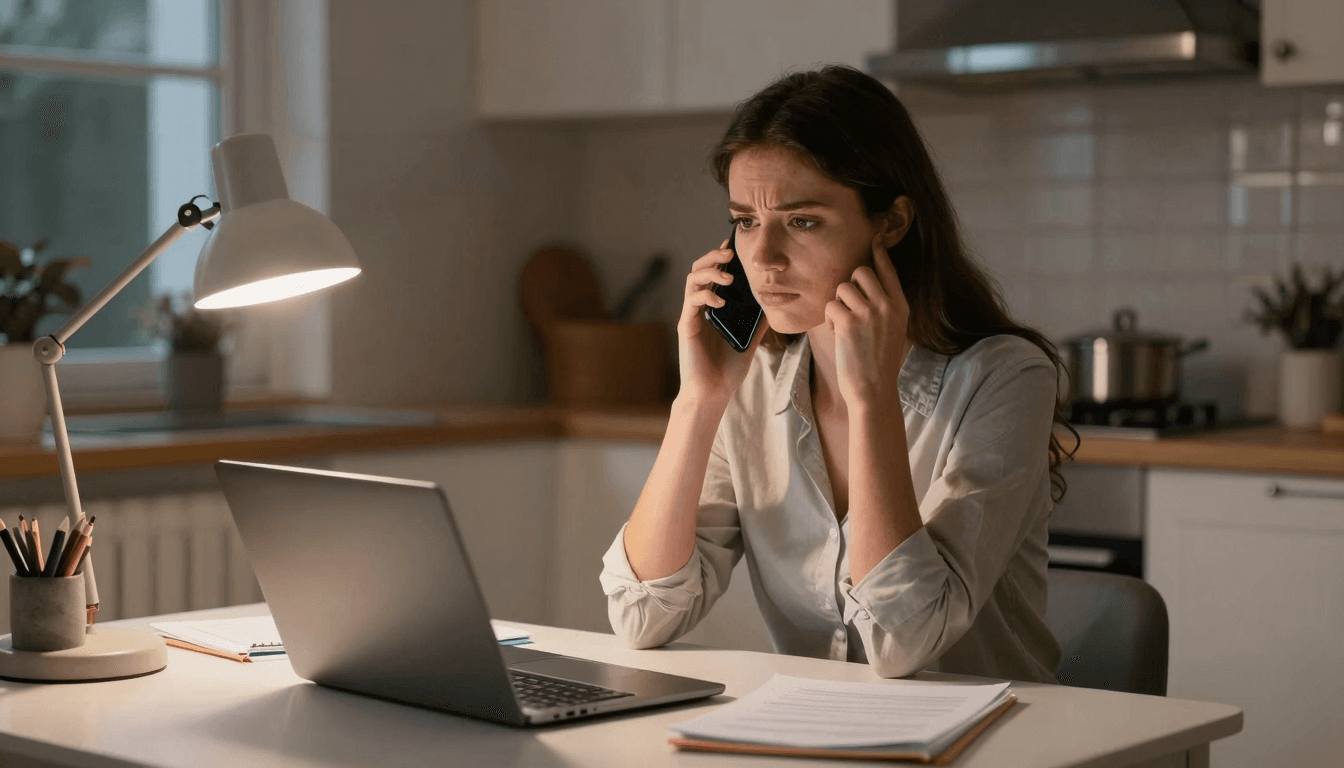
The Defense You Don't Get a Do-Over On: Rehearsing Oral Exams and Thesis Defenses With Mimicall
Reading your notes silently isn't the same skill as defending them out loud. Here's how students use Mimicall's AI phone calls to rehearse oral exams and thesis defenses before the real committee.
You've read the material a hundred times. You know the argument cold. And yet the night before your thesis defense, or the morning of your oral exam, your stomach still drops every time you picture a panel of professors leaning forward and asking, "Can you walk us through that methodology again?" Mimicall exists for exactly that gap — the space between knowing your material and being able to say it out loud, under pressure, without your voice cracking. It's an AI persona phone-calling app: you build a custom AI examiner with a personality, a line of questioning, and a voice, and it calls your actual phone so you can rehearse the defense the same way you'll live it — out loud, in real time, with no pause button.
Key Takeaways
- Reading your notes silently and defending them out loud use different mental muscles — oral exams and thesis defenses reward the second one, and most students only ever practice the first.
- Mimicall lets you build a persona that asks the kind of probing, follow-up questions a real committee member would, so you get used to thinking on your feet before the actual defense.
- You can schedule a rehearsal call for the same time of day as your real defense, or take an instant call the moment your nerves spike at 1 a.m.
- The app uses conversational AI and text-to-speech technology to hold a genuine back-and-forth, not a scripted quiz — it follows up, digs deeper, and reacts to what you actually say.
- New users get 10 free credits, enough to try a full mock defense before deciding whether to keep using it for language practice, job interviews, or difficult conversations of any kind.
Why doesn't reading your notes feel like enough?
Ask any doctoral candidate what the hardest part of a defense is, and very few of them say "the content." They say the moment a committee member asks something they didn't rehearse and they have to answer out loud, in front of people, with no way to edit themselves. That's a fundamentally different skill from writing a strong chapter or memorizing your slides. Silent review trains recognition — you see a term and know what it means. Oral defense trains production — you have to generate a coherent, spoken answer from scratch, under time pressure, while maintaining eye contact and tone.
This is precisely the gap an AI phone call app can close. When you take a call from a Mimicall persona built to sound like a skeptical committee chair, you're forced to produce answers out loud instead of just recognizing them on a page. You stumble the first time. You find the sentence that keeps tripping you up. And then, because it's a phone call and not a flashcard, you fix it the way you'd fix it in real life — by saying it again, better.
Can an AI call my phone and actually sound like an examiner?
Yes, and this is the part people are usually most skeptical about until they hear it for themselves. Modern text-to-speech systems can now render pitch, pause length, and emotional inflection accurately enough that most listeners cannot reliably distinguish a well-tuned synthetic voice from a human one over a short phone call. That matters for exam rehearsal specifically, because tone is half the challenge — a defense isn't just about correct answers, it's about sounding composed while you give them, and you can't practice composure against a silent page.
Underneath the voice, conversational AI built on large language models is processing what you say in real time and generating a contextually appropriate follow-up question, typically fast enough that the exchange feels like a normal back-and-forth rather than a call-and-response quiz. And natural language processing is what lets the system track the thread of a longer conversation — so if you mention your control group in minute two, a well-built persona can circle back and ask about it in minute six, the same way a real committee member would remember and probe further. These aren't marketing claims so much as a description of what has to be true for a rehearsal call to feel like the real thing instead of a toy.
How do you actually build a defense-rehearsal persona?
Mimicall gives you more than 50 persona templates to start from, and you can customize any of them — personality, tone, area of focus, even how aggressively they push back on weak answers. For exam prep specifically, the most useful approach is to build a persona around the actual structure of your defense: give it your topic, tell it which sections of your thesis or presentation you're least confident about, and ask it to play a mix of supportive and skeptical committee members. Some students build two personas — one gentle, to warm up and find their footing, and one deliberately tough, to pressure-test their weakest answers before the real panel does.

You're not limited to academic committees, either. The same persona-building tools that work for a thesis defense work for a bar exam oral component, a medical licensing interview, a language proficiency oral assessment, or any other high-stakes spoken evaluation where the format is "someone asks, you answer, live."
Should you schedule the call or take it instantly?
Both options exist because different kinds of anxiety call for different kinds of practice. Scheduling a call for the same hour as your real defense trains your body's clock — you get used to feeling sharp and composed at 9 a.m. instead of only ever rehearsing in the loose, low-stakes evening. Instant calls solve a different problem: the 1 a.m. spiral, where you suddenly need to hear yourself defend your third chapter right now or you won't sleep at all. Being able to open the app and take a call within moments, rather than waiting for an appointment, is often what actually gets anxious students to practice instead of just worrying.
What happens when you get an answer wrong mid-call?
This is where a live AI phone call earns its keep over a study guide. When you fumble an answer or contradict something you said earlier, a well-configured Mimicall persona can ask a natural follow-up — "Can you clarify that, because a minute ago you said X" — the same way a real evaluator would catch the inconsistency. That forces you to either defend your position more carefully or correct it out loud, which is exactly the muscle you need for the real event. A flashcard app can't do that. A study group sometimes won't, because friends are often too polite to push. An AI phone call, tuned to actually probe, will.

Is this any different from just talking to yourself in the mirror?
Talking through your answers alone has real value, but it's missing the two things that make a defense stressful: another voice asking unpredictable follow-ups, and the social pressure of a live phone call where you can't pause and restart. An AI phone call app closes both gaps. You don't control the questions, so you can't unconsciously steer toward your strongest material the way you would rehearsing solo. And because it's a real call to your real phone, your nervous system treats it more like the actual event than a mirror ever will — which is exactly the point of rehearsal.
Frequently Asked Questions
Is Mimicall only for students, or can anyone use it to rehearse a defense-style conversation? It's built for anyone facing a spoken evaluation or high-stakes conversation, not just students. People use it to rehearse everything from academic defenses and licensing interviews to sales pitches, job interviews, and language practice — the underlying skill, producing a confident spoken answer under pressure, is the same across all of them.
Do I need to write out every possible question in advance? No. Give your persona the topic, the tone you want, and a few areas you're worried about, and it will generate its own follow-up questions in the moment — that's the point of using conversational AI rather than a static script. You're practicing thinking on your feet, not reciting memorized answers.
How much does it cost to try before my actual defense? New users start with 10 free credits, which is enough to run at least one full mock defense call before you need to decide whether to buy more. Most students run a few calls in the days leading up to the real thing rather than one single rehearsal.
Will the AI voice sound robotic and throw off my focus? Mimicall uses current-generation text-to-speech technology specifically because older, flatter synthetic voices break the illusion and make rehearsal feel silly. The goal is a voice natural enough that you forget you're talking to software within the first minute of the call, which is what lets the rehearsal actually train your nerves instead of just your memory.
Before you walk into that room
You cannot eliminate defense-day nerves entirely, and you probably shouldn't try — a little adrenaline sharpens focus. What you can do is make sure the first time you ever say your answers out loud, under real conversational pressure, isn't in front of the committee. That's the entire premise behind Mimicall: an AI phone call app that lets you rehearse the exact format of the moment that scares you, as many times as you need, until saying it out loud stops feeling like the hard part. Open mimicall.app, build a persona that sounds like your toughest committee member, and take the call before they do.